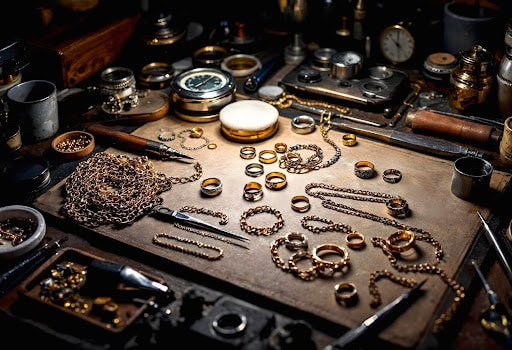
Jewellery designing is a fascinating blend of creativity, craftsmanship, and technical expertise. Behind every beautiful ring, necklace, bracelet, or pair of earrings is a designer who uses specialised tools and equipment to transform ideas into wearable art. For beginners entering the jewellery industry, understanding the most important jewellery designing tools and equipment is essential. Whether you’re planning to pursue a jewellery designing course, start a jewellery-making hobby, or build a professional career, knowing the purpose of each tool can help you learn the craft more effectively.
Modern jewellery design combines traditional handcrafting methods with advanced digital technologies. Today’s designers use everything from sketching pencils and pliers to sophisticated CAD software and 3D printing systems.
This beginner-friendly guide explains the most important jewellery design tools, their uses, benefits, and how aspiring designers can develop the practical skills required for success in the industry.
Why Understanding Jewellery Designing Tools Is Important
Before creating professional jewellery pieces, designers must understand the tools that support each stage of the design and manufacturing process.
Learning about jewellery tools helps students:
- Improve technical knowledge
- Develop practical skills
- Create accurate designs
- Work more efficiently
- Understand jewellery production
- Build industry confidence
A strong foundation in jewellery equipment is essential for both creative and technical growth.
Basic Jewellery Designing Tools for Beginners
1. Sketching Tools
Every jewellery designing begins with an idea. Sketching tools help designers visualise concepts before production starts.
Essential Sketching Equipment
- Drawing pencils
- Colored pencils
- Markers
- Erasers
- Drawing sheets
- Sketchbooks
- Rulers
Jewellery illustration remains an important skill, even in the digital era.
2. Design Templates and Measurement Tools
Precision is critical in jewellery design.
Common measuring tools include:
- Vernier calipers
- Scale rulers
- Ring size gauges
- Measuring tapes
These tools ensure accurate dimensions and proper fitting during the design process.
Hand Tools Used in Jewellery Designing
1. Jewellery Pliers
Pliers are among the most important jewellery-making tools.
Common types include:
Round Nose Pliers
Used for:
- Creating loops
- Forming curves
- Wire shaping
Flat Nose Pliers
Used for:
- Holding components
- Bending wires
- Straightening materials
Chain Nose Pliers
Useful for working in tight spaces and detailed designs.
2. Wire Cutters
Wire cutters help trim metal wires accurately and safely.
They are commonly used when creating:
- Necklaces
- Bracelets
- Earrings
- Wire-wrapped jewellery
3. Jeweller’s Saw
A jeweller’s saw is used for cutting intricate patterns and shapes from metal sheets.
It allows designers to create detailed and customised jewellery components.
4. Files and Sanding Tools
Files help smooth rough edges and refine metal surfaces.
Common file types include:
- Flat files
- Round files
- Needle files
These tools improve finishing quality and precision.
Jewellery Manufacturing Equipment
1. Workbench
A professional jewellery workbench provides a stable and organised workspace.
Features often include:
- Tool storage
- Bench pin
- Work surface
- Lighting support
A dedicated workspace improves efficiency and safety.
2. Soldering Equipment
Soldering is an essential jewellery manufacturing technique.
Important equipment includes:
- Soldering torch
- Solder wire
- Flux
- Heat-resistant surfaces
Soldering helps join metal components securely.
3. Polishing Machine
Jewellery pieces often require polishing before completion.
Polishing equipment helps:
- Enhance shine
- Remove scratches
- Improve appearance
- Create professional finishes
Proper polishing significantly increases product quality.
Gemstone Handling Tools
1. Tweezers
Jewellery designers use specialised tweezers for handling small gemstones safely.
They help avoid damage and improve precision during stone placement.
2. Gemstone Loupe
A gemstone loupe is a magnifying tool used to inspect:
- Gem quality
- Inclusions
- Surface details
- Stone cuts
Understanding gemstone quality is important for professional jewellery design.
3. Stone Setting Tools
Stone setting tools help secure gemstones in jewellery pieces.
These tools are commonly used in:
- Ring design
- Pendant creation
- Luxury jewellery manufacturing
Digital Jewellery Designing Tools
1. CAD Software
Modern jewellery design increasingly relies on Computer-Aided Design (CAD).
Popular jewellery CAD software includes:
- Rhino
- MatrixGold
- JewelCAD
- AutoCAD
CAD allows designers to create:
- 3D jewellery models
- Technical drawings
- Production-ready files
2. Benefits of Jewellery CAD
- Improved accuracy
- Faster modifications
- Better visualization
- Reduced production errors
CAD skills are highly valued in today’s jewellery industry.
3. 3D Printing Technology
Many jewellery manufacturers now use 3D printing to create prototypes.
Benefits include:
- Faster production
- Cost efficiency
- Design testing
- Complex model creation
3D printing is becoming a standard part of modern jewellery production.
Safety Equipment Every Beginner Should Use
Safety is often overlooked by beginners.
Essential safety equipment includes:
1. Protective Eyewear
Protects eyes during cutting, polishing, and soldering activities.
2. Dust Masks
Useful when sanding, polishing, or working with fine particles.
3. Heat-Resistant Gloves
Protect soldering and metalworking processes.
Following safety procedures reduces risks and promotes professional work habits.
Benefits of Learning Jewellery Tools and Equipment
1. Better Design Accuracy
Understanding tools improves precision and design quality.
2. Enhanced Creativity
When designers understand their equipment, they can experiment with more advanced techniques.
3. Industry Readiness
Practical knowledge helps students transition smoothly into professional jewellery careers.
4. Improved Problem-Solving Skills
Tool familiarity allows designers to overcome production challenges more effectively.
Challenges Beginners May Face
1. Learning Technical Skills
Some tools require patience and practice to master.
Beginners often need time to develop confidence and accuracy.
2. Equipment Costs
Professional jewellery tools can be expensive.
Students should focus on learning core tools first before investing in advanced equipment.
3. Keeping Up with Technology
The jewellery industry continues to evolve through CAD software, 3D printing, and digital manufacturing.
Continuous learning is important for long-term success.
Practical Tips for Aspiring Jewellery Designers
1. Join Professional Training Programs
A structured jewellery designing course provides access to industry-standard tools, expert guidance, and practical workshops.
2. Start with Basic Tools
Focus on learning sketching tools, pliers, measurement equipment, and basic manufacturing techniques before moving to advanced technologies.
3. Practice Regularly
Consistent practice improves:
- Precision
- Speed
- Design confidence
- Technical understanding
4. Learn CAD Early
Digital design skills are increasingly important in the modern jewellery industry.
Learning CAD software can improve employability and career opportunities.
Future of Jewellery Designing Tools
The future of jewellery design is becoming increasingly technology-driven.
Emerging innovations include:
- AI-assisted jewellery design
- Advanced CAD systems
- Automated manufacturing
- Sustainable production technologies
- Enhanced 3D printing capabilities
Designers who combine traditional craftsmanship with digital expertise will have the strongest career prospects.
Final Thoughts
Understanding jewellery designing tools and equipment is one of the first steps toward building a successful career in jewellery design. From sketching materials and pliers to CAD software and 3D printing technology, every tool plays an important role in the creative and manufacturing process.
Aspiring designers should focus on developing both practical craftsmanship and modern digital skills. With proper training, consistent practice, and access to professional tools, students can confidently pursue opportunities in the growing jewellery industry.
Mastering these tools not only improves technical abilities but also lays the foundation for creativity, innovation, and long-term career success.
FAQs
1. What are the basic jewellery designing tools for beginners?
Basic tools include sketching pencils, pliers, wire cutters, measuring tools, files, and a jeweller’s saw.
2. Is CAD important for jewellery designing?
Yes. CAD software is widely used in modern jewellery production for creating accurate 3D models and production-ready designs.
3. What equipment is used for gemstone handling?
Common gemstone tools include tweezers, gemstone loupes, and stone setting equipment.
4. Do jewellery designers need safety equipment?
Yes. Protective eyewear, gloves, and dust masks are essential for safe jewellery manufacturing practices.
5. Can I learn jewellery designing without expensive equipment?
Yes. Beginners can start with basic tools and gradually invest in advanced equipment as their skills develop.
Build Your Jewellery Design Career with IFJD
At IFJD, students gain hands-on experience with industry-standard jewellery designing tools and equipment while learning from experienced professionals. Through practical workshops, CAD training, portfolio development, and real-world projects, IFJD helps aspiring designers develop the technical and creative skills needed to succeed in the modern jewellery industry. Contact IFJD and transform your passion for jewellery into a rewarding professional career.