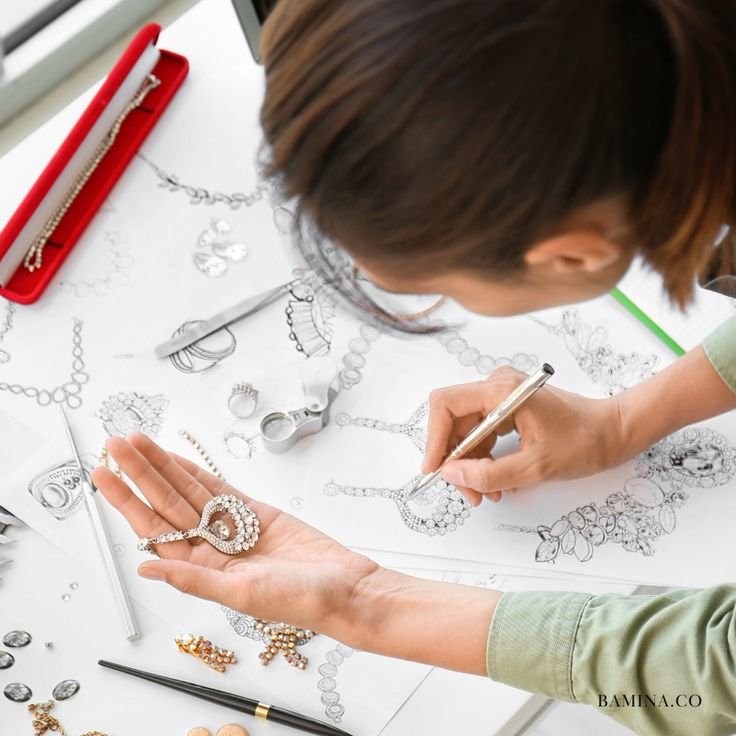
A beautiful piece of jewellery begins with more than an attractive sketch. Behind every successful ring, necklace, bracelet, or statement piece is a jewellery designer who understands proportion, materials, craftsmanship, customer preferences, and the practical realities of production.
Jewellery designing combines artistic creativity with technical knowledge. A designer needs to transform an idea into a design that is visually appealing, wearable, technically possible, and suitable for its intended market. Professional jewellery design education commonly covers areas such as design theory, metal rendering, gemstone representation, drafting, and portfolio development.
So, what separates an average designer from a great one? Let’s explore the qualities and skills that matter most.
What Does a Jewellery Designer Do?
A jewellery designer develops concepts and visual designs for jewellery products. Depending on the role, they may work with jewellery manufacturers, retailers, luxury brands, design studios, exporters, or their own clients.
Their responsibilities can include:
- Researching jewellery and fashion trends
- Developing design concepts
- Creating hand-drawn jewellery sketches
- Creating digital jewellery designs
- Understanding gemstones and metals
- Developing collections
- Preparing design presentations
- Working with craftsmen or manufacturers
- Modifying designs based on production requirements
- Creating portfolios for clients or employers
Modern jewellery designing can involve both traditional sketching and digital design tools. IFJD’s jewellery design curriculum, for example, covers jewellery sketching, illustration, gemstone basics, metal knowledge, design development, presentation, collection planning, and digital jewellery designing.
10 Qualities That Make a Great Jewellery Designer
1. Strong Creative Vision
Creativity is the foundation of jewellery design.
A jewellery designer should be able to generate original ideas rather than simply reproduce designs that already exist. Inspiration can come from architecture, nature, traditional crafts, cultural motifs, fashion, historical jewellery, or everyday objects.
However, creativity does not mean making something complicated. Sometimes the strongest design is simple, balanced, and easy to wear.
A good designer asks:
- What is the inspiration behind this piece?
- Who will wear it?
- What makes the design distinctive?
- Does every element serve a purpose?
- Can the idea become a practical jewellery product?
The ability to answer these questions helps turn creativity into purposeful design.
2. Excellent Drawing and Illustration Skills
A jewellery designer must be able to communicate ideas visually.
Hand sketching remains valuable because it allows designers to quickly explore concepts, proportions, shapes, and decorative elements. Professional jewellery design training can include rendering metals, gemstones, pearls, form, texture, and different jewellery views.
A strong jewellery illustration should communicate details such as:
- Overall shape
- Proportion
- Stone placement
- Metal appearance
- Surface texture
- Decorative details
- Perspective
- Scale
The goal isn’t simply to create an attractive drawing. The drawing should help another person understand what the finished jewellery piece is supposed to look like.
3. Understanding of Gemstones and Metals
Designers work with materials that behave differently during manufacturing. Understanding these materials can significantly improve the practicality of a design.
A jewellery designer should develop basic knowledge of:
- Gold and other precious metals
- Silver and platinum
- Diamonds
- Coloured gemstones
- Pearls
- Gemstone cuts
- Metal finishes
- Stone settings
- Durability and wearability
For example, a designer who understands gemstone characteristics can make more informed decisions about shape, size, placement, and overall construction.
Material knowledge also helps designers communicate more effectively with manufacturers and jewellery craftsmen.
4. Attention to Detail
Jewellery is generally viewed at a relatively small scale, which makes precision particularly important.
A small difference in proportion, stone placement, thickness, or symmetry can change the appearance of a finished piece.
Great jewellery designers pay attention to details such as:
- Symmetry
- Proportion
- Stone alignment
- Setting style
- Edge finishing
- Surface texture
- Wearability
- Visual balance
This attention to detail is especially important when a design moves from a concept sketch into production.
5. Knowledge of Jewellery Design Principles
Creativity becomes more effective when supported by design fundamentals.
A professional jewellery designer should understand principles such as:
- Balance: Ensuring different elements work together visually.
- Proportion: Making sure stones, metal elements, and decorative components are appropriately sized.
- Contrast: Using differences in shape, texture, colour, or material to create visual interest.
- Rhythm: Repeating elements in a controlled way to create flow.
- Harmony: Ensuring all components feel like part of the same design language.
These principles help designers create jewellery that looks intentional rather than overcrowded.
6. Digital Jewellery Design Skills
Technology has changed how jewellery concepts are developed and presented.
Digital jewellery design and CAD tools can help designers create detailed models, make modifications, communicate dimensions, and prepare concepts for manufacturing.
However, technology should support creativity rather than replace it. A designer still needs to determine what should be created and why.
7. Trend Awareness Without Blindly Following Trends
A jewellery designer needs to understand what customers currently want, but simply copying trends can make a collection feel generic.
Trend research should involve observing:
- Fashion shows
- Jewellery exhibitions
- Retail collections
- Social media
- Cultural influences
- Consumer preferences
- Luxury and bridal markets
- Emerging design movements
The important skill is interpretation.
For example, if minimalist jewellery is becoming popular, a designer doesn’t necessarily need to reproduce existing minimalist products. Instead, they can identify the underlying preference for simplicity and develop an original collection around it.
8. Understanding of the Target Customer
Great design is not created in isolation.
A bridal jewellery collection and a contemporary everyday collection may require completely different design approaches.
Before creating a collection, a designer should understand:
- Customer age group
- Lifestyle
- Budget range
- Occasion
- Cultural preferences
- Preferred materials
- Fashion preferences
- Expected level of customisation
This customer-first approach makes designs more commercially relevant.
9. Strong Communication Skills
A jewellery designer often works with several people, including clients, craftsmen, CAD designers, manufacturers, merchandisers, and marketing teams.
A designer therefore needs to explain ideas clearly.
Communication may involve:
- Presenting design concepts
- Explaining inspiration
- Discussing materials
- Giving production instructions
- Receiving feedback
- Making revisions
- Presenting a collection to a client
A technically excellent design can still face problems if its concept cannot be communicated effectively.
10. Patience and Willingness to Improve
Jewellery design involves experimentation and revision.
The first sketch may not be the final design. A gemstone may not work as expected. A manufacturing limitation may require changes. A client may request a different proportion or finish.
A successful jewellery designer learns to treat feedback as part of the design process.
Continuous learning is particularly important because jewellery trends, consumer preferences, technology, and production techniques continue to evolve.
The Importance of Practical Experience
One of the biggest differences between learning jewellery design theoretically and developing professional capability is practical application.
Students should not spend all their time studying design principles without actually creating designs.
Practical experience can include:
- Jewellery sketching exercises
- Design assignments
- Collection development
- Material studies
- Workshops
- Live projects
- Portfolio creation
- Digital jewellery design
- Design presentations
IFJD’s published jewellery design course emphasizes practical assignments, workshops, projects, portfolio development, and hands-on training alongside subjects such as gemstone basics, metal knowledge, jewellery illustration, and design development.
Building a Strong Jewellery Design Portfolio
A portfolio is one of the most important professional assets for an aspiring jewellery designer.
Instead of simply filling a portfolio with finished drawings, students should demonstrate the design process.
A strong jewellery design portfolio can include:
- Inspiration and research
- Mood boards
- Initial sketches
- Design experimentation
- Material selection
- Refined illustrations
- Digital designs
- Complete jewellery collections
- Final presentation boards
This gives employers or clients a clearer understanding of how the designer thinks and develops ideas.
Professional jewellery design education also commonly uses portfolio development to help students demonstrate their creative and technical abilities to potential employers or clients.
Is Jewellery Designing a Good Career Choice?
Jewellery designing can lead to several career paths depending on a person’s skills and interests.
Possible roles include:
- Jewellery Designer
- CAD Jewellery Designer
- Jewellery Illustrator
- Jewellery Brand Consultant
- Product Designer
- Jewellery Merchandiser
- Design Studio Professional
- Freelance Jewellery Designer
- Jewellery Entrepreneur
However, career growth should not be viewed as automatic after completing a course. Skills, portfolio quality, practical experience, professional networking, design originality, and continued learning all influence a designer’s development.
What Should You Look for in a Jewellery Design Course?
If you are planning to learn jewellery designing professionally, don’t select a course based only on its duration or certificate.
Look for a jewellery design institute program that provides:
- Jewellery sketching
- Design fundamentals
- Gemstone knowledge
- Metal knowledge
- Jewellery illustration
- Digital jewellery designing
- Collection development
- Practical assignments
- Portfolio development
- Industry-oriented guidance
The learning environment also matters. Mentorship and opportunities to receive feedback can help students understand how their designs can be improved.
Final Thoughts
A great jewellery designer is not simply someone who can draw attractive jewellery. Great designers combine creativity with technical understanding, artistic vision with practicality, and originality with an awareness of customer needs.
The strongest foundation comes from learning design principles, practising continuously, understanding gemstones and metals, developing digital skills, studying real jewellery, and building a portfolio that demonstrates the complete design process.
For students who want structured guidance, practical exposure, and industry-oriented jewellery design education, choosing a course that combines creativity and technical learning can provide a valuable starting point.
FAQs About Becoming a Jewellery Designer
1. What skills does a jewellery designer need?
A jewellery designer needs creativity, sketching and illustration ability, knowledge of gemstones and metals, understanding of design principles, attention to detail, communication skills, and increasingly, digital jewellery design skills.
2. Do I need to be good at drawing to become a jewellery designer?
Drawing skills are highly useful because jewellery concepts often begin as sketches. However, drawing ability can be developed through consistent practice and professional training. Digital tools can also support the design process.
3. Is CAD important for jewellery designers?
Yes, CAD skills can be valuable in modern jewellery design and manufacturing. However, CAD should complement rather than replace fundamental design thinking, material knowledge, and creativity.
4. Can I become a jewellery designer after 12th?
Yes. Students can pursue jewellery design education after completing their school education. The appropriate course depends on their career goals, existing skills, and preferred area of specialisation.
5. How long does it take to learn jewellery designing?
The duration depends on the type and depth of the program. Short-term courses can provide foundational skills, while longer programs may cover more advanced design and technical areas. IFJD currently offers a six-month jewellery design course covering fundamental and specialised areas of jewellery design.
Build Your Jewellery Design Skills With IFJD
If you are ready to turn your interest in jewellery into professional design skills, IFJD – Institute of Fashion & Jewellery Design, Rajkot, offers a dedicated jewellery design course covering sketching, illustration, gemstone and metal knowledge, digital jewellery designing, collection development, and practical projects. The institute also welcomes students from across Saurashtra.
Contact IFJD about the curriculum and take the next step toward building your jewellery design portfolio and career.