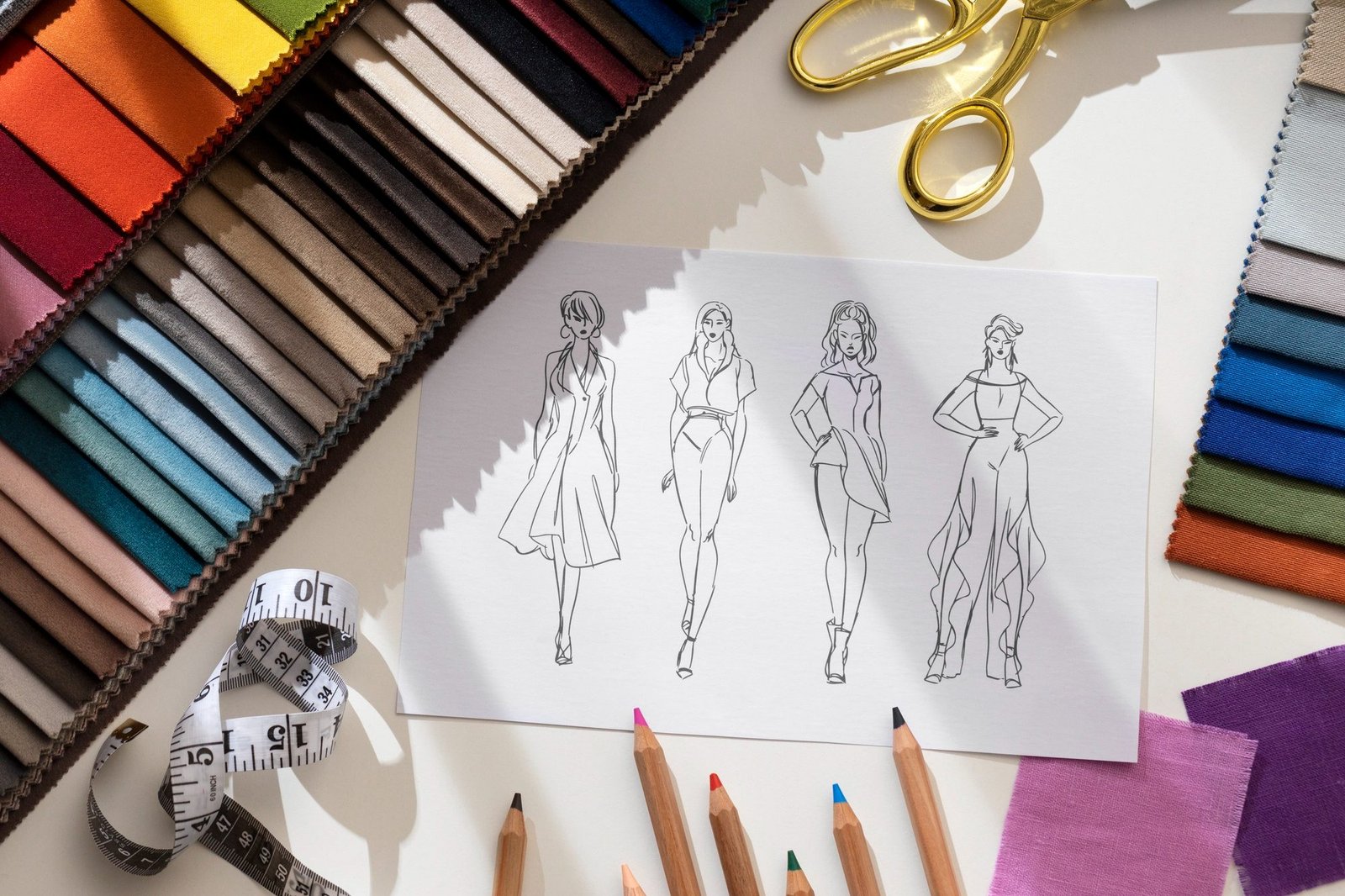
In fashion design, a garment’s overall shape often determines its visual impact before anyone notices its fabric, color, or decorative details. This overall shape is known as a fashion silhouettes. It influences how clothing looks on the body, moves, and communicates a particular style or mood.
Understanding fashion silhouettes is an essential foundation for fashion design students because it helps them create balanced outfits, experiment with proportions, and develop original garment concepts. Whether designing an elegant evening gown, structured office wear, or relaxed everyday clothing, choosing the right silhouette can transform a simple idea into a distinctive design.
In this beginner-friendly guide, we explore the main types of fashion silhouettes, their characteristics, how designers use them, and practical ways students can improve their silhouette-drawing and garment-design skills.
What Are Fashion Silhouettes?
A fashion silhouette is the overall outline or shape of a garment as seen on the body. It describes the garment’s external form rather than details like buttons, embroidery, prints, or stitching.
For example, a dress that fits closely around the waist and gradually widens toward the hem creates a different silhouette from a straight-cut dress that falls evenly from the shoulders.
Fashion silhouettes are influenced by several factors:
- Garment structure: How the clothing is cut, shaped, and constructed.
- Fit and volume: Whether the garment is fitted, loose, or oversized.
- Fabric properties: How weight, stiffness, stretch, and drape affect the shape.
- Proportion: How the upper body, waist, and lower body relate visually.
- Styling: How different garments work together to create an overall outline.
For fashion design students, learning to recognize these elements provides a foundation for sketching, pattern making, draping, and collection development.
Why Are Fashion Silhouettes Important in Design?
Silhouettes help designers establish a garment’s identity and communicate their creative vision. They can make clothing appear structured, flowing, dramatic, minimal, or relaxed.
Understanding silhouettes helps students:
- Develop more balanced garment designs.
- Explore different proportions and shapes.
- Select appropriate fabrics for a design concept.
- Create variety within a fashion collection.
- Communicate ideas through fashion illustrations.
- Understand how patterns and construction influence shape.
For example, a collection featuring oversized jackets, wide-leg trousers, and relaxed shirts may create a loose, voluminous visual direction. A collection built around fitted dresses and tailored jackets communicates a more defined shape.
Silhouette selection should support the garment’s intended function, the designer’s concept, and the wearer’s comfort rather than simply following current trends.
7 Common Types of Fashion Silhouettes
Fashion designers use a range of silhouettes depending on the garment, design period, intended fit, and creative direction. The following are useful starting points for beginners.
1. A-Line Silhouette
The A-line silhouette is fitted or relatively narrow at the upper body and gradually widens toward the hem, forming a shape similar to the letter A.
It is commonly used for dresses, skirts, coats, and some types of jackets. Its balanced shape makes it a useful starting point for students learning garment proportions.
Design tip: Experiment with different hem widths and waist placements to see how small pattern adjustments change the overall outline.
2. Straight or Column Silhouette
A straight or column silhouette follows a relatively consistent line from the upper body toward the hem. Depending on the design, it may be fitted or have a relaxed cut.
This silhouette appears in sheath dresses, straight skirts, long coats, and minimalist garments.
Designers often use it to create a clean, elongated appearance. Fabric choice is important because a soft textile may create gentle movement, while a structured fabric can produce a sharper outline.
3. Fit-and-Flare Silhouette
A fit-and-flare silhouette has a more fitted bodice or waist area and a skirt that widens below the waist.
It is popular in dresses and skirts because it combines a defined upper shape with additional volume below. The amount of flare can vary from subtle to dramatic.
Design tip: Practice changing the skirt fullness while keeping the bodice shape consistent. This helps you understand how volume influences the garment’s overall balance.
4. Hourglass Silhouette
The hourglass silhouette emphasizes a defined waist in relation to the upper and lower body. Designers may create this shape through tailoring, darts, belts, shaped seams, or structured garments.
It appears in fitted dresses, tailored jackets, and certain formal outfits.
For students, this silhouette provides an opportunity to study garment shaping, waist definition, and the role of pattern construction in creating a particular outline.
5. Oversized Silhouette
An oversized silhouette uses additional volume and a relaxed fit rather than closely following the body’s contours.
It is common in contemporary jackets, shirts, coats, knitwear, and wide-leg trousers. However, oversized design does not simply mean choosing a larger size. Designers intentionally adjust proportions, shoulder lines, garment lengths, and volume to create the desired effect.
Design tip: Balance volume across an outfit. For example, an oversized jacket can be paired with a straighter trouser shape to create visual contrast.
6. Ball Gown or Full Skirt Silhouette
This silhouette features a fitted or defined upper body and a full, voluminous skirt. It is often associated with bridal wear, formal gowns, and occasion wear.
The desired shape may be achieved through fabric layers, pleating, gathered material, underskirts, or structural support.
Students should consider the weight of the fabric and the construction techniques required to support the skirt’s volume without compromising movement or comfort.
7. Empire Silhouette
The empire silhouette features a raised waistline positioned above the natural waist, usually just below the bust, with fabric flowing downward.
It is commonly used in dresses and formal garments. Depending on the material and construction, the lower section can appear soft and flowing or more structured.
This silhouette helps students explore how changing the waistline affects garment proportions and visual movement.
How Fabric Influences Fashion Silhouettes
Fabric selection plays a major role in determining whether a silhouette looks soft, structured, fitted, or voluminous.
For example, chiffon and lightweight rayon can support flowing shapes, while denim and certain wool fabrics can create firmer outlines. Satin may drape smoothly, but its behavior also depends on its weave, weight, and composition.
When developing a garment, consider:
- Drape: Does the fabric fall softly or hold its shape?
- Weight: Will the fabric create the intended volume?
- Stretch: Does it support the required fit and movement?
- Structure: Can it maintain the desired outline?
- Construction: Can the material be sewn and finished appropriately?
Fashion design students should test fabric swatches and make sample garments when possible. A silhouette that works in a sketch may look very different when constructed with a particular textile.
How to Choose the Right Silhouette for a Fashion Design Project
Choosing a silhouette starts with understanding the purpose of the design rather than selecting a shape at random.
Step 1: Define the Design Concept
Decide whether the garment is casual, formal, professional, festive, or experimental. The intended use helps narrow the possible shapes.
Step 2: Consider the Wearer and Fit
Think about the wearer’s comfort, mobility, preferences, and the intended fit. Avoid assuming that one silhouette is universally suitable for a particular body type.
Step 3: Select Appropriate Fabrics
Match the material to the shape. Structured designs often need fabrics that hold their form, while fluid designs generally require materials with suitable drape.
Step 4: Sketch Multiple Variations
Create several silhouettes before committing to a final design. Explore different lengths, volumes, waist placements, and proportions.
Step 5: Test the Design
Use a dress form, basic pattern, draping exercise, or sample garment to check how the silhouette behaves in three dimensions. Refine the design based on the results.
Frequently Asked Questions
1. What are fashion silhouettes?
Fashion silhouettes are the overall outlines or shapes of garments when viewed on the body. They can be fitted, straight, flared, oversized, or voluminous, depending on the design and construction.
2. What are the main types of fashion silhouettes?
Common types include A-line, straight or column, fit-and-flare, hourglass, oversized, ball gown, and empire silhouettes. Designers can also combine or modify these shapes to create original designs.
3. Why should fashion design students learn about silhouettes?
Understanding silhouettes helps students develop garment proportions, improve fashion illustrations, make informed fabric choices, and communicate design concepts more effectively.
4. How does fabric affect a fashion silhouette?
Fabric weight, drape, stiffness, stretch, and construction influence how a garment hangs and maintains its shape. The same pattern can produce different results when made from different materials.
5. How can beginners practice drawing fashion silhouettes?
Start by sketching basic shapes such as A-line dresses, straight skirts, and oversized jackets. Practice changing garment length, volume, and proportions, then compare your drawings with real garments or sample constructions.
Develop Your Fashion Design Skills With IFJD
Understanding fashion silhouettes is an important step toward creating garments with thoughtful proportions, structure, and visual appeal. At the Institute of Fashion & Jewellery Design (IFJD), Rajkot, students can develop their creative and technical abilities through fashion illustration, fabric knowledge, pattern making, garment construction, and practical design projects.
Explore the fashion design course at IFJD to learn more about the curriculum and training opportunities. Build your foundation in fashion design and take the next step toward developing your own creative style.