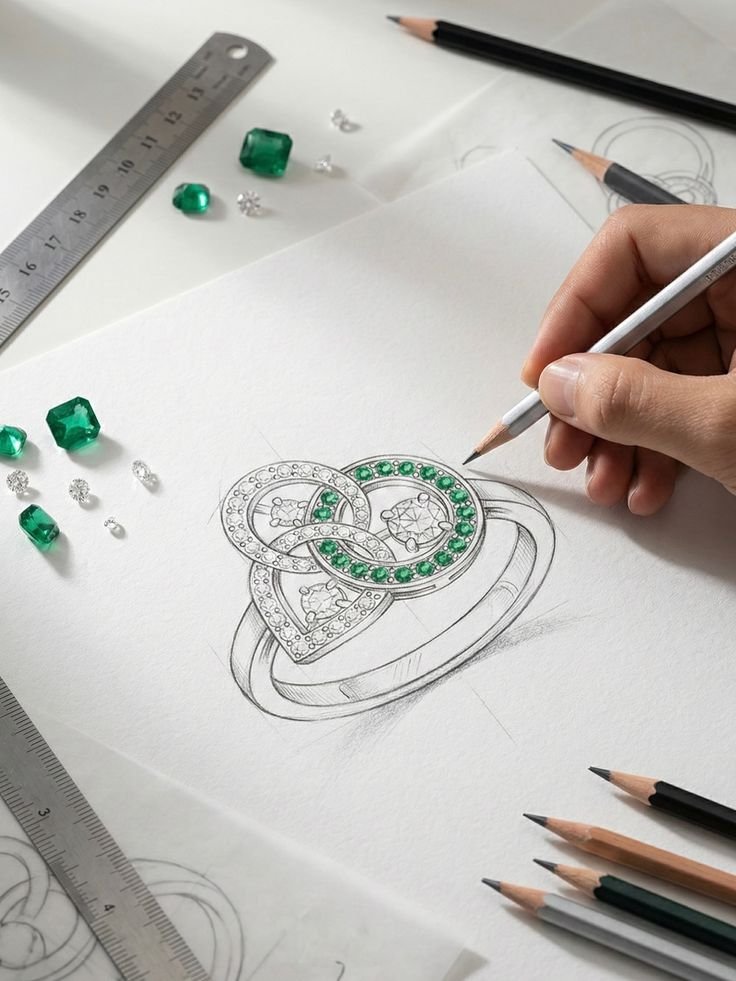
Starting a career in jewellery design can be exciting, especially for students who enjoy creativity, fashion, gemstones, and detailed craftsmanship. However, becoming a successful jewellery designer requires more than having good ideas. Beginners need to develop technical skills, understand materials, practise design fundamentals, and learn how creative concepts are transformed into wearable jewellery. Understanding these jewellery designing mistakes early can help beginners improve faster and develop a professional approach to design.
Whether you’re starting a jewellery design course, building your first portfolio, or exploring a career in the jewellery industry, learning what to avoid is just as important as learning what to do. Many aspiring designers make avoidable mistakes during the early stages of their learning journey.
This guide explains the most common jewellery designing mistakes beginner make and provides practical tips to help you become more confident and industry-ready.
Why Beginners Make Jewellery Designing Mistakes
Jewellery design combines artistic creativity with technical precision. Beginners are often focused on making their designs look attractive, but professional jewellery must also be functional, wearable, durable, and practical to manufacture.
Some common reasons beginners struggle include:
- Limited practical experience
- Lack of understanding of proportions
- Insufficient jewellery sketching practice
- Limited knowledge of gemstones and metals
- Ignoring manufacturing processes
- Focusing only on trends
- Not seeking professional feedback
The good news is that these challenges can be overcome through structured learning, consistent practice, and guidance from experienced professionals.
1. Ignoring Proportion and Balance
One of the most common jewellery designing mistakes for beginners is creating designs without considering proportion.
A ring may look beautiful on paper but appear too large when worn. Similarly, an earring may have an oversized gemstone that makes it uncomfortable.
Proportion affects:
- Wearability
- Visual balance
- Comfort
- Weight
- Overall appearance
How to Avoid It
Study real jewellery and practise drawing pieces from different angles. Compare the size of gemstones, metal sections, clasps, and decorative elements.
Always ask yourself whether the design would be comfortable and practical when produced.
2. Focusing Only on Creativity
Creativity is essential, but it isn’t enough to become a professional jewellery designer.
A designer also needs knowledge of:
- Jewellery construction
- Gemstones
- Metals
- Manufacturing
- CAD
- Cost considerations
- Consumer preferences
A highly creative design that cannot be manufactured efficiently may not have commercial value.
How to Avoid It
Develop both creative and technical abilities. When creating a concept, think about how the piece will actually be produced and worn.
3. Neglecting Jewellery Sketching Practice
Jewellery sketching is one of the fundamental skills every aspiring designer should develop.
Beginners sometimes move quickly toward digital design without first understanding basic drawing, proportion, perspective, and shading.
This can make it difficult to communicate ideas clearly.
How to Avoid It
Practise sketching regularly. Start with simple rings, pendants, earrings, and bracelets before moving to detailed collections.
Focus on:
- Clean outlines
- Correct proportions
- Perspective
- Shading
- Gemstone representation
- Metal textures
4. Copying Existing Jewellery Designs
Taking inspiration from existing jewellery is useful, but directly copying another designer’s work is not.
Copying limits creativity and makes your portfolio look less original. It can also create intellectual property concerns when used commercially.
How to Avoid It
Study existing designs to understand techniques and trends, then develop your own concepts.
For example, instead of copying a traditional floral necklace, explore how floral forms could inspire a modern geometric collection.
Original thinking is an important part of a successful jewellery design career.
5. Ignoring Gemstone and Material Knowledge
Jewellery designers need to understand the materials they work with.
A design should consider the characteristics of gemstones and metals, including:
- Hardness
- Colour
- Durability
- Weight
- Shape
- Setting requirements
For example, not every gemstone is suitable for every type of jewellery or setting.
How to Avoid It
Study gemstone properties and jewellery materials as part of your design education. Understanding materials will help you create realistic and production-friendly designs.
6. Not Learning CAD Jewellery Designing
Modern jewellery production relies heavily on digital design and 3D modelling.
One of the important jewellery designing mistakes beginners can make is avoiding CAD jewellery design because they prefer traditional sketching.
Hand drawing remains valuable, but CAD skills can significantly improve your professional opportunities.
How to Avoid It
Learn jewellery CAD software and practise creating:
- Rings
- Pendants
- Earrings
- Bracelets
- Custom jewellery models
Combining traditional sketching with digital modelling gives designers a more complete skill set.
7. Adding Too Many Details
Beginners often believe that adding more stones, patterns, textures, and decorative elements makes a design better.
In reality, excessive detailing can make jewellery look crowded and difficult to manufacture.
How to Avoid It
Follow the principle that every design element should have a purpose.
Experiment with removing unnecessary details. A simpler design can often have greater visual impact and commercial appeal.
8. Ignoring Wearability and Comfort
Jewellery is meant to be worn, not simply displayed.
A beautiful design may fail if it is:
- Too heavy
- Too sharp
- Difficult to fasten
- Uncomfortable against the skin
- Poorly balanced
How to Avoid It
Consider the wearer during every stage of the design process. Think about weight, dimensions, movement, closures, edges, and durability.
User experience should be part of jewellery design from the beginning.
9. Failing to Understand Manufacturing
A designer should understand how jewellery moves from concept to finished product.
Beginners who don’t understand manufacturing may create designs that are difficult or expensive to produce.
Learn about:
- Casting
- Stone setting
- Polishing
- Soldering
- Finishing
- Manufacturing limitations
How to Avoid It
Take advantage of workshops and practical training. Observing how jewellery is manufactured can dramatically improve your design decisions.
10. Not Building a Jewellery Design Portfolio
A strong jewellery design portfolio is essential when applying for internships, jobs, or freelance opportunities.
Some beginners wait until they complete their jewellery design course before starting their portfolio.
How to Avoid It
Start early and continuously add your strongest projects.
Your portfolio can include:
- Jewellery sketches
- Mood boards
- Concept development
- CAD designs
- Technical drawings
- Finished projects
- Collection presentations
Focus on quality rather than quantity.
11. Following Every Trend
Keeping up with jewellery trends is important, but blindly following every trend can weaken your design identity.
Trends change quickly, while strong design principles remain relevant.
How to Avoid It
Use trends as inspiration rather than instructions. Study why a trend is successful and determine how you can reinterpret it through your own design language.
12. Avoiding Feedback
Beginners sometimes become attached to their designs and find it difficult to accept criticism.
However, constructive feedback can reveal problems that you may not notice yourself.
How to Avoid It
Ask faculty members, mentors, classmates, and industry professionals for feedback.
Use criticism to improve rather than viewing it as a negative judgment.
Practical Jewellery Designing Tips for Beginners
If you’re serious about improving your skills, follow these jewellery designing tips for beginners:
- Sketch regularly.
- Study real jewellery closely.
- Learn gemstone and metal properties.
- Practise proportion and perspective.
- Develop original concepts.
- Learn CAD jewellery designing.
- Understand basic manufacturing techniques.
- Build your portfolio gradually.
- Follow industry trends without copying them.
- Ask for feedback.
- Experiment with different jewellery categories.
Consistent practice will gradually improve both creativity and technical confidence.
How Avoiding These Mistakes Benefits Your Career
Learning from common jewellery designing mistakes can give aspiring designers several advantages.
1. Better Design Quality
Understanding proportion, materials, and wearability leads to more professional designs.
2. Stronger Portfolio
A jewellery design portfolio containing original sketches, CAD models, and well-developed collections demonstrates your capabilities to employers.
3. Greater Industry Readiness
Knowledge of manufacturing and digital design prepares you for real-world jewellery projects.
4. More Creative Confidence
As technical skills improve, designers can experiment with more complex concepts without losing practicality.
5. Better Career Opportunities
A combination of creativity, technical knowledge, CAD skills, and practical experience can help you pursue opportunities with jewellery brands, manufacturers, design studios, and independent businesses.
Choosing the Right Jewellery Design Institute
A structured learning environment can help beginners avoid many common jewellery designing mistakes.
When choosing a jewellery design institute, look for:
- Experienced faculty
- Practical jewellery workshops
- Jewellery sketching training
- CAD jewellery designing
- Gemstone education
- Manufacturing exposure
- Portfolio development
- Industry projects
- Internship opportunities
- Career support
The right institute should teach students not only how to create attractive designs but also how to develop commercially practical and technically accurate jewellery.
Final Thoughts
Making mistakes is a natural part of becoming a jewellery designer. However, understanding the most common jewellery designing mistakes can help beginners progress more efficiently.
Don’t focus only on making your designs attractive. Learn to consider proportion, comfort, materials, manufacturing, customer preferences, and commercial practicality. Develop your jewellery sketching skills, learn CAD, understand gemstones, and build a strong portfolio throughout your education.
With the right training, consistent practice, and guidance from experienced professionals, beginners can turn their creative ideas into professional jewellery collections and build a rewarding jewellery design career.
Frequently Asked Questions
1. What are the most common jewellery designing mistakes beginners make?
Common jewellery designing mistakes include ignoring proportion, copying existing designs, neglecting sketching practice, adding excessive details, ignoring wearability, and failing to understand manufacturing.
2. Is jewellery sketching still important if I learn CAD?
Yes. Jewellery sketching helps you develop concepts and communicate ideas before creating detailed CAD models. Both skills complement each other.
3. Why should beginners learn CAD jewellery designing?
CAD jewellery designing allows designers to create accurate 3D models and prepare designs for modern manufacturing processes. It is an important skill for many jewellery industry roles.
4. How can I improve my jewellery designing skills?
Practise sketching regularly, study gemstones and metals, learn CAD, understand manufacturing, seek feedback, and develop different jewellery collections for your portfolio.
5. What should I look for in a jewellery design institute?
Look for experienced faculty, practical training, CAD education, gemstone studies, manufacturing exposure, portfolio development, internships, and industry-oriented projects.
Build Your Jewellery Design Skills with IFJD
At IFJD, aspiring jewellery designers can develop both creative and technical skills through practical, industry-focused education. From jewellery sketching and gemstone studies to CAD jewellery design, portfolio development, and hands-on projects, IFJD helps students build the knowledge and confidence required for the modern jewellery industry. Contact IFJD to develop your creativity, strengthen your technical skills, and take a confident step toward a successful jewellery design career.